
ECMO / LVAD
Hong Kong to Chicago
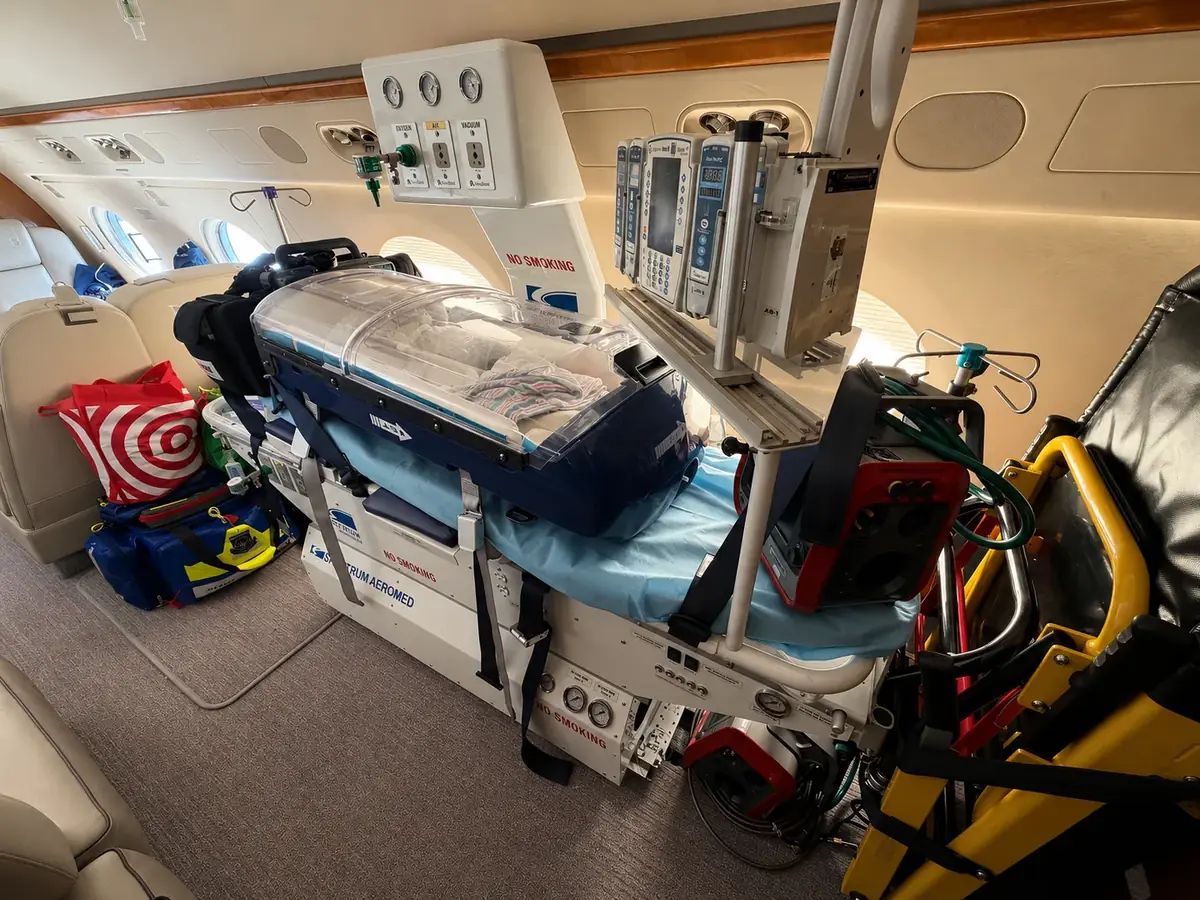
Six-month-old patient on ECMO with a ventricular assist device. Long-range ICU jet with a paediatric critical care team.
Medical transport coordination · 24/7
Bed-to-bed ICU and stretcher transfers to and from Australia, worldwide, 24/7.
A few details is enough. A coordinator calls you back to go through the rest.
How it works
Tell us where the patient is, where they need to go and what has happened. The line is answered 24/7, and forms are called back within [X] minutes. You don't need the medical records in hand to start.
Our medical team reads the reports, speaks with the treating doctor where needed, and recommends the level of care the patient actually needs. You get a written quote, usually within [X] hours.
A ground ambulance from the hospital bed to the aircraft, a medical team for the whole journey, and a ground ambulance to the receiving hospital, where the team hands over in person.
Levels of care
The medical reports decide this, not the budget or the aircraft available. If you're not sure, choose "Not sure" on the form and we'll work it out with the treating doctor.
Suits: Stable patients who need to lie flat, or travel seated with a nurse or doctor.
A stretcher is fitted on a scheduled airline flight, or a seat booked alongside the escort. The lowest-cost option when it is clinically safe. Every booking depends on the airline's own medical clearance.
More detailSuits: Patients who can't wait for an airline, won't be cleared by one, or need more monitoring and oxygen than an airline allows.
A private aircraft configured for the patient, flying on the patient's timetable rather than an airline's, with a doctor and nurse on board.
More detailSuits: Ventilated and critically ill patients over long distances, including complex cases.
Intensive care for long sectors, with specialist teams matched to the patient: ECMO, neonatal transfers in a transport incubator, paediatric critical care and cardiac cases.
More detail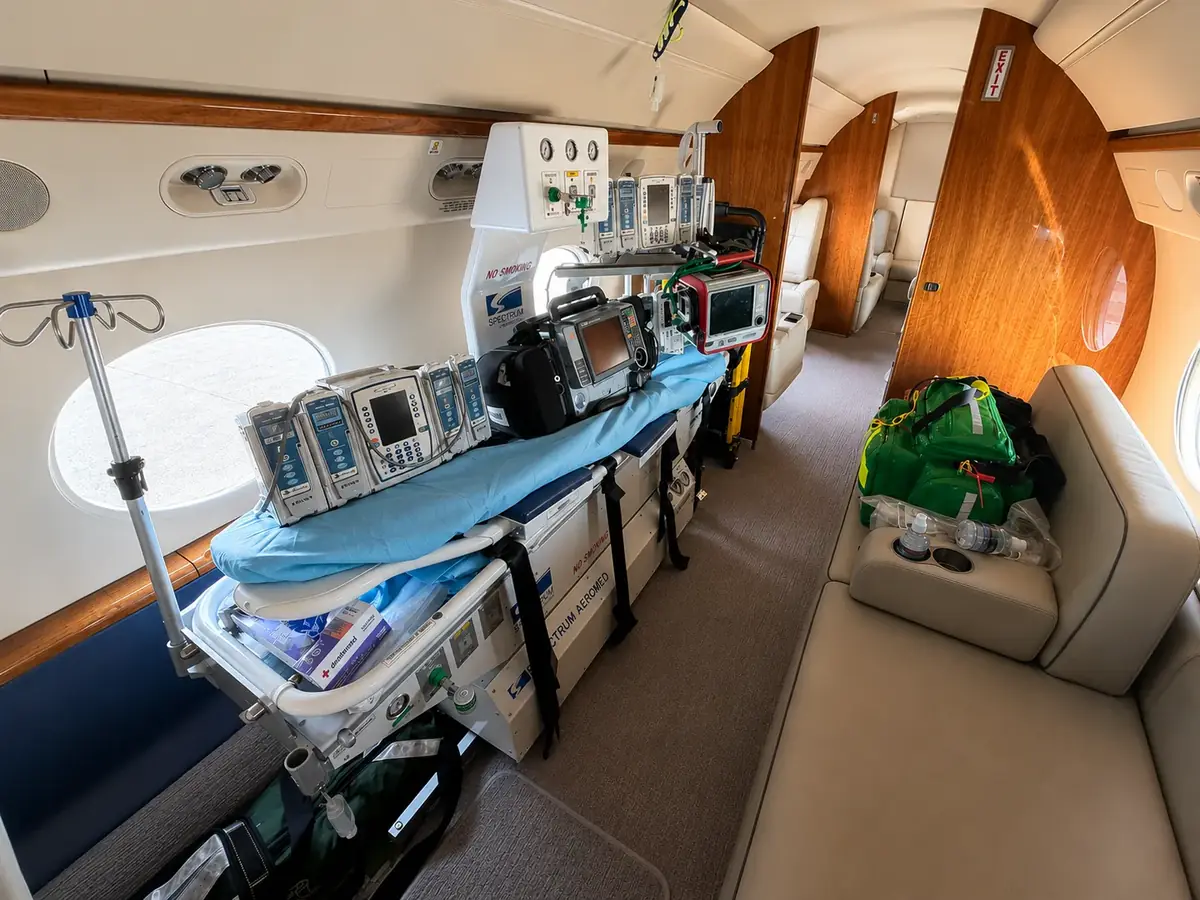
How we keep patients safe
Moving someone who is unwell always carries some risk. These are the checks we make on every transfer, whatever the level of care.
Before we recommend how a patient should travel, our medical team reads the reports and, where needed, speaks with the treating doctor. The recommendation is based on what the patient needs, not on the most expensive option.
If we think the patient isn't fit to fly yet, we say so and stay in touch with the hospital until they are.
We only book aircraft operators that hold a current air operator's certificate for air ambulance work, and medical crews with critical care and aeromedical experience. Accreditations we require: [ACCREDITATIONS].
Ask us before you agree to anything and we will tell you the operator, the aircraft type and the crew's qualifications for your case.
One coordinator follows the patient from the hospital bed to the receiving bed. We confirm that the receiving hospital has accepted the patient before departure, and book the ground ambulances at both ends.
The medical team hands over in person, with the hospital records and the notes from the flight.
Recent missions
Anonymised. Names, dates and hospitals are withheld to protect patients and families.
ECMO / LVAD
Six-month-old patient on ECMO with a ventricular assist device. Long-range ICU jet with a paediatric critical care team.
Cardiac
Cardiac patient moved hospital to hospital, with ground ambulances at both ends.
ICU retrieval
Intensive care patient retrieved from Fiji, with a critical care team throughout and handover on arrival.
Who we help
Someone you love is in hospital far from home. We explain the options in plain language and deal with the hospital for you.
Medical review, a clear written quote and updates at each stage, so the case can be approved and closed cleanly.
Transfers that fit discharge and admission plans, with doctor-to-doctor handover at both ends.
Capacity for escort, air ambulance and ICU jet cases to and from Australia and across Asia-Pacific.
FAQ
Any hour. Or send the details and we'll call you back.