
Why does a child need a different team?
Children are not small adults. Their airways, drug doses, fluid needs and temperature control are different, and the equipment has to fit them. A sick child is cared for in flight by clinicians who work with children every day: a paediatric or neonatal doctor and a nurse with matching intensive care experience. When the case calls for it we add specialists, such as an ECMO team or a cardiac perfusionist.
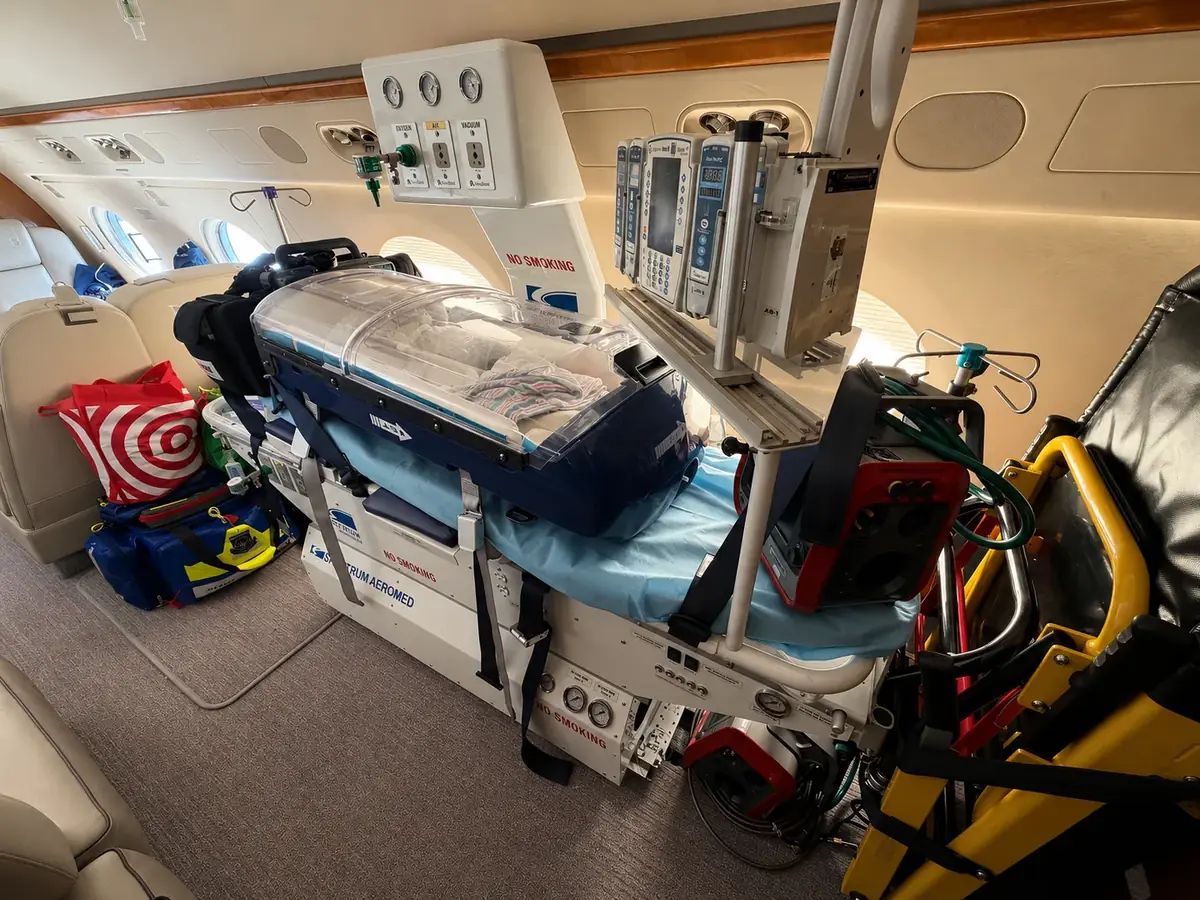
How are newborns moved?
Premature and unwell newborns travel in a transport incubator, a sealed unit that keeps the baby warm, controls humidity and oxygen, and carries its own ventilator, monitors and infusion pumps. The incubator locks onto a certified mounting in the aircraft so it stays steady through take-off, turbulence and landing. Feeds, medications and oxygen are planned for the whole journey before the team leaves the nursery.
What equipment comes for older children?
For infants and children we carry paediatric ventilator circuits, airway equipment in the right sizes, monitoring, infusion pumps and a drug plan worked out from the child's weight. A restraint system designed for smaller patients keeps them secure on the stretcher. Familiar things from home, such as a blanket or a soft toy, are welcome.
Can a parent fly with their child?
In most cases one parent can travel on the aircraft, and we plan for it from the start. Space can be tight on complex transfers with extra equipment or staff, and the medical team has the final say on board. Where a parent cannot travel on the air ambulance, we help arrange a commercial flight so they arrive as close to the same time as possible.
What paperwork does a child's transfer need?
Both hospitals agree the transfer, and the receiving unit names the doctor accepting the child. We need the child's passport, or an emergency travel document if it has been lost, and consent from a parent or legal guardian. If parents are separated or only one is travelling, border authorities may ask for written consent from the other parent, so it helps to have that ready early. A newborn who has never had a passport may need one issued urgently, and the nearest embassy or consulate can advise on how.
How is a paediatric transfer planned?
Our medical team speaks with the treating neonatologist or paediatrician, reviews the reports and imaging, and confirms a receiving unit that has accepted the child. The flight is timed around the child's care, not the other way round. Long-range cases, such as a six-month-old on ECMO moved from Hong Kong to Chicago, need more preparation and are planned stage by stage with both hospitals.